
"centrifugal roaster"
67 article(s) found
This article will take you into the world of coffee, a complete introduction to fine coffee.
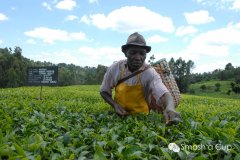
Most Arabica coffee beans mature from June to August and Robart coffee beans from September to October. Therefore, although in some countries where the dry and wet seasons are not obvious, such as Colombia and Kenya, there are two flowering periods a year, that is, two harvests, strictly speaking, only once a year. Due to different regions, the harvest time is also different. North of the equator (eg Ethiopia

The introduction to coffee roasting recommends the complete Book of Coffee self-baking.
When the author published the first edition of this book in 1996, roasting coffee beans at home was something that only tireless coffee addicts would do. At that time, roasting coffee beans was a very difficult thing to master, and roasters had to work hard to find a way to roast coffee beans to a moderate brown. Today, individuals still roast coffee beans at home.

Professional coffee roasting knowledge of boutique coffee
First, the mixing of coffee beans people need to combine coffee from different places for several different purposes. The ideal goal, of course, is to piece together a coffee that tastes better than any of them. But generally speaking, Arabica coffee from a single origin is enough to make coffee that tastes good for export; it has a delicate flavor, a soft taste and a sweet aftertaste. So you don't have to spell it.

A brief introduction to the introduction to Coffee roasting, the complete Book of Coffee self-baking
When the author published the first edition of this book in 1996, roasting coffee beans at home was something that only tireless coffee addicts would do. At that time, roasting coffee beans was a very difficult thing to master, and roasters had to work hard to find a way to roast coffee beans to a moderate brown. Today, individuals still roast coffee beans at home.

Professional Coffee Roasting Knowledge Corporate Training Barista
People need to put coffee from different origins together for several different purposes. The ideal goal, of course, is to combine coffee that tastes better than any of them. But in general, Arabica coffee from a single origin is enough to make a coffee that tastes good; it has a light flavor, a soft taste and a sweet aftertaste. So there's no need to spell it.

Professional coffee roasting knowledge for enterprise training
Coffee beans are about 20 minutes long (inversely proportional to the temperature), and the temperature is as high as more than 200 degrees Celsius. In the process of dialogue with hot cuts, coffee beans have undergone many chemical changes. First, the mixing of coffee beans people need to combine coffee from different places for several different purposes. The ideal goal, of course, is to piece together a coffee that tastes better than any of them. But one.

Factors affecting the quality of coffee beans in terms of harvest, processing, treatment and storage
The annual winter, that is, the dry season is the harvest time for coffee beans. After three to four years of growth, the coffee trees gradually mature and begin to bear fruit. The fruits are arranged in strings or clumps next to the branches. The coffee beans are wrapped in a red coat and can be picked as soon as they turn red. Most Arabica coffee beans mature in June and August, while Robasta coffee beans mature in September and October, so although